This month, we catch up with Eamonn Shanks, a familiar face across Mid Ulster football whose refereeing journey spans almost three decades.
From his early days as a club referee with Derryhirk United to representing Northern Ireland as a FIFA Assistant Referee on the international stage, Eamonn reflects on the highlights of his career, the friendships forged through the game, and his continued passion for refereeing at grassroots level.
With memories ranging from local pitches to Wembley Stadium, his story is a fascinating insight into life in the middle.
How did you get into refereeing?
I played in the Mid Ulster Football League for Derryhirk United, at that time there was a shortage of referees, and I ended up refereeing a few as a club referee, then when I decided it was time to stop playing, I gave it a go. I attended (and passed) a six-week course at Banbridge Town taken by Graham Topping. My first match was Queens Grads v Lurgan Town and I loved it. That was 28 years ago.
How is refereeing structured?
When I started there were three main categories Junior, Intermediate (this included officials who did linesman in the first division as all other leagues operated with just the referee) and Senior.
Through all the ranks you are assessed by former referees and at the end of the season the results are evaluated and if successful you’re nominated for promotion there’s also a fitness test to be passed.
The structure has changed and there are a few more categories now with assistant referees and different levels of intermediate referees, a lot more female referees too and there had been a lot of great work done by the Irish Football Association and the Northern Ireland Referees Association to improve the standard of refereeing across the board.
What have been the highlights of your refereeing journey?
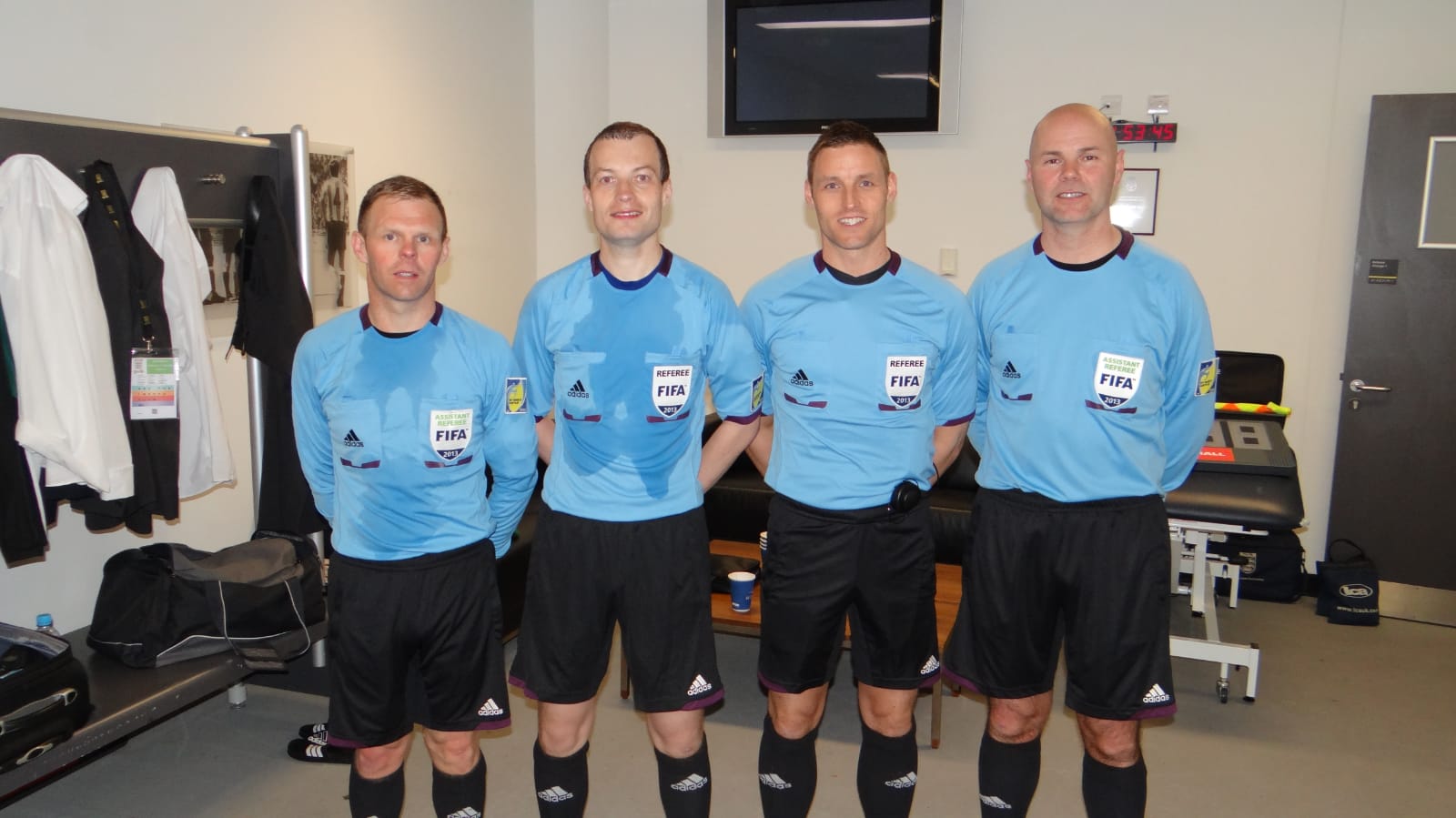
Early in my Intermediate days Assistant Refereeing became a specialised role and I focused on that, so I was appointed as Assistant Referee most weekends, I must have done something right and in 2003 I was appointed to the FIFA list of Assistant Referees and stayed on that until 2013 when I had to retire from it at the compulsory age of 45.
I was fortunate enough to have just over 50 international appointments, visited some amazing countries, some fantastic stadiums, made great lifelong friends and have amazing memories to look back on.
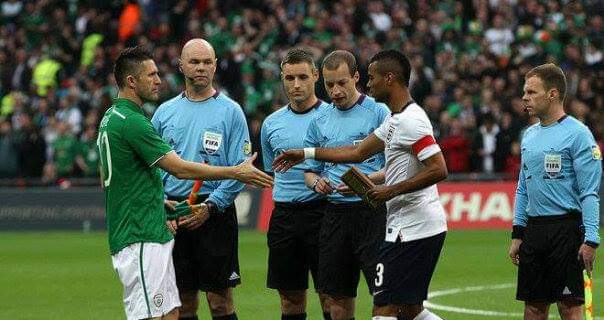
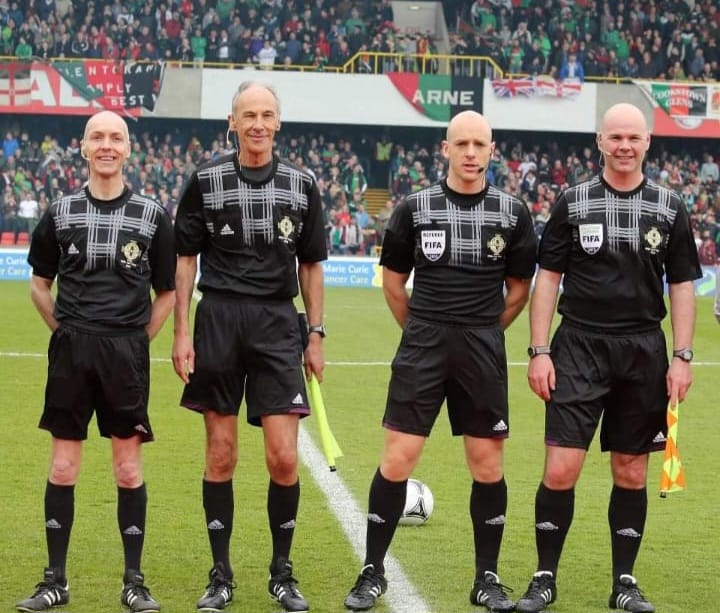
Domestically I was privileged to do assistant referee at five Irish Cup Finals, 2 Setanta Cup Finals and several high-profile games. Internationally the pinnacle came when Alan Snoddy rang and asked if I was available on 29th May 2013 to do a match, I told him I was and was left completely speechless when he confirmed the appointment as England v Republic of Ireland in Wembley as part of the FA’s 150-year anniversary. A crowd of over 80000 including my father, my wife and my son, it was a very proud moment.
What level do you referee at now?
As I’ve gotten older, I’ve accepted that as a referee you need to be able to match the fitness levels of players, I’ve dropped back down through the ranks of intermediate to junior and enjoy refereeing in the Mid Ulster Football League every week. I also referee youth football and find that very rewarding. The set up of the youth leagues across Northern Ireland is fantastic, some great coaches working with young players creating a strong future for the game.
What has referring given you?
Apart from memories the one big take away I’ll have from referring is the companionship, I’ve made great lifelong friends, fellow referees, players, club officials, it’s lovely meeting up with players who I first met in their playing days but they’re now either watching their own children or coaching putting something back into the game and they get an opportunity to remind me of all the howlers I made against them!
Advice for others:
If you think refereeing might be for you, give it a go. Accept that you’ll make mistakes, try to learn from every game, communication is important from your prematch chat, talking during the game to be preventative.
At the end of my first season referring Jimmy Duffy was assessing a cup final and a very experienced ex Irish League player was playing; he ran rings around the opponents (and the very inexperienced referee team on the night) Jimmy knew him from his Irish League days and knew he could be difficult, I’ve always remembered his advice that night – having a difficult player on the field is like going for a walk for 90 minutes with a stone in your shoe, if you don’t do anything about it it’ll just get worse, you need to deal with it. There’s a way to manage that, a quiet word in passing, a public word but also try to develop a rapport before you go looking for cards.
Have I enjoyed it?
Well, I’m looking forward to my match this weekend as much as I was that first one back in 1998.